
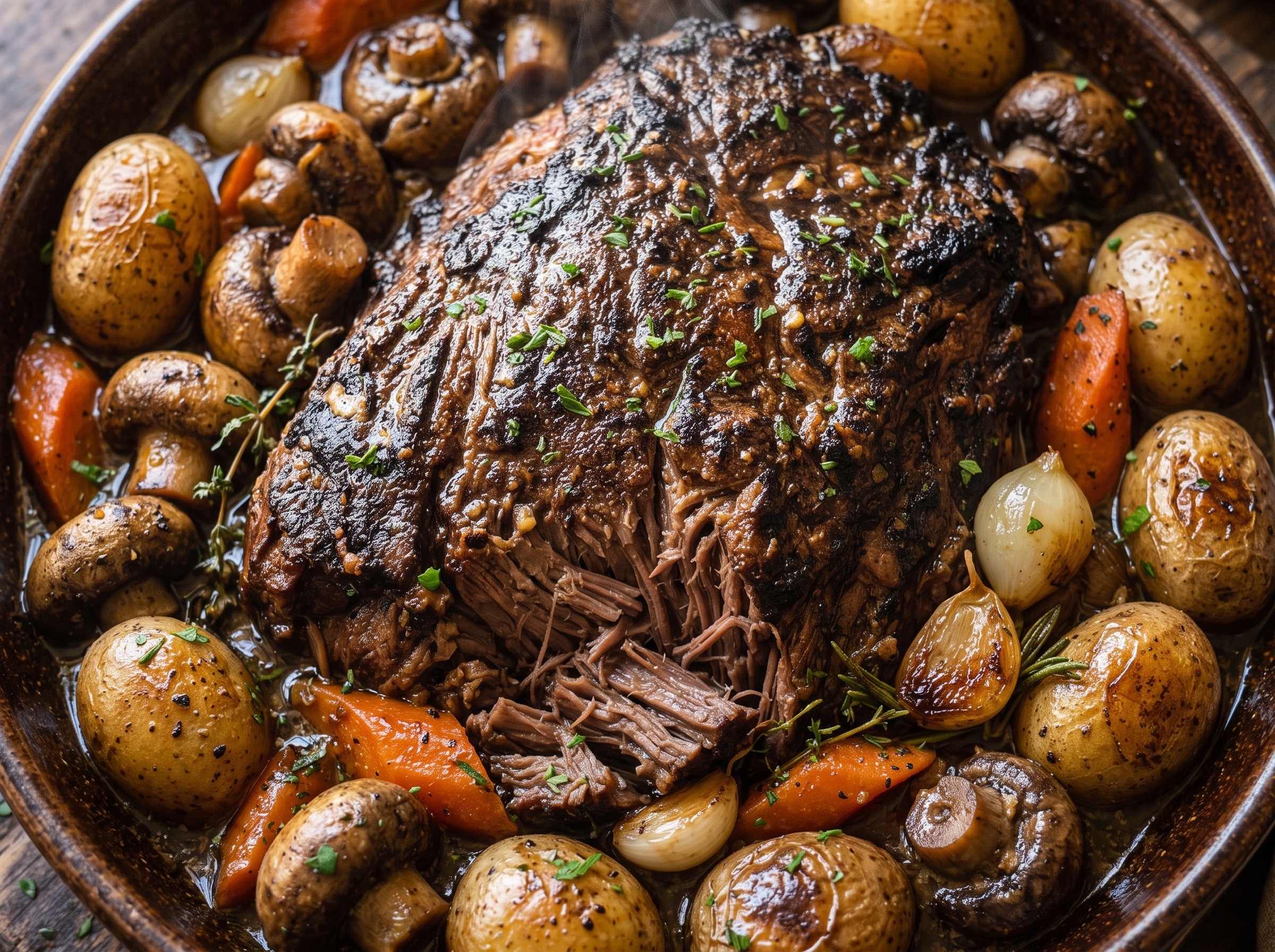
So you’re craving something insanely rich, savory, and comforting, but you’re also far too lazy to spend your entire evening standing over a spitting hot skillet while your feet slowly give up on you? Same. Welcome to the lazy gourmet club, where we let appliance engineering do 90% of the heavy lifting while we take 100% of the credit.
Let’s set the scene: it’s 5:00 PM on a rainy Tuesday. You open your front door, and before your shoes are even off, a wall of pure, unadulterated savory aroma hits you square in the face. It smells like a rustic French bistro that requires reservations three months in advance, except you’re in sweatpants and the head chef is a countertop appliance you bought on sale six years ago. That is the magic of this Slow Cooker Garlic Mushroom Braised Pot Roast. We’re talking about beef so shockingly tender that a plastic fork could slide through it without putting up a fight, nestled in a velvety garlic-mushroom gravy that demands to be ladled over a mountain of buttery mashed potatoes.
If you think pot roast is just that dry, gray block of meat your school cafeteria served with lukewarm mystery gravy, prepare to have your culinary worldview thoroughly recalibrated. This isn’t just dinner; it’s a full-spectrum sensory warm hug. Put on your apron (or don’t, no judgment here), grab a wooden spoon, and let’s talk about how to make absolute magic happen with minimal effort.
Why This Recipe is Awesome
Look, I could write an entire passionate manifesto about why you need this roast in your life, but I know you’re busy and probably hungry. So let’s break down why this specific recipe is going to become your new kitchen obsession:
- It is practically idiot-proof: Seriously, even if you regularly burn toast or boil water until the pot turns black, this roast is aggressively forgiving. The slow cooker environment is a humid, low-temperature sanctuary where meat breakdown happens gently over hours. As long as you don’t accidentally leave the appliance unplugged (which, FYI, I have done, and yes, I cried), you are virtually guaranteed a spectacular result.
- The gravy builds itself: We aren’t doing any complex French mother sauce wizardry here. The beef juices, aromatics, red wine reduction, and earthy mushroom liquids all meld together inside the stoneware vessel to create a rich, dark pan sauce that will make you want to drink it straight out of a mug.
- It turns cheap cuts into liquid gold: Chuck roast is traditionally a tough, muscular, budget-friendly cut of beef full of connective tissue. In short: awful for quick cooking, absolute royalty for braising. Hours of gentle heat transform tough collagen into silky gelatin, giving you luxurious tender meat that practically dissolves on your tongue.
- Your house will smell like high culinary art: Forget expensive scented candles named “Autumn Twilight” or “Cashmere Woods.” The perfume of garlic, fresh thyme, caramelized onions, and braised beef floating through your home is superior in every conceivable way.
- Leftovers taste even better tomorrow: Assuming you don’t eat the entire roast straight out of the pot while standing in your kitchen at midnight, tomorrow’s lunch is going to make your coworkers deeply envious. The flavor actually deepens and improves overnight in the fridge.
Pro-Tip for Maximum Laziness: Do yourself a favor and chop your vegetables the night before while you’re already in the kitchen cooking something else. Toss them in a sealed container in the fridge, and your morning prep will take literally five minutes flat.
Ingredients You’ll Need
Before you run off to the grocery store, let’s go over what you need and why each ingredient earns its spot in the pot. No mystery fillers here—every single item is playing a key role in the ultimate flavor parade.
- 3.5 to 4 lbs Boneless Beef Chuck Roast: The undisputed heavyweight champion of pot roasts. Look for generous white marbling running throughout the meat—that fat is your primary source of moisture and flavor during the long cook.
- 16 oz (1 lb) Cremini or Baby Bella Mushrooms: Washed and halved (or left whole if small). They soak up the braising liquid like savory little sponges and lend a deep, earthy umami backbone to the gravy.
- 10–12 cloves Fresh Garlic: Peeled and smashed. Yes, you read that right—a dozen cloves. Don’t panic! Slow cooking tames the sharp bite of garlic, transforming it into a sweet, mellow, nutty butter-like compound.
- 1 large Yellow Onion: Thickly sliced. These melt down during the cook to create a rich, sweet aromatic base for our pan sauce.
- 1 cup Dry Red Wine: Cabernet Sauvignon, Pinot Noir, or Merlot work beautifully. It deglazes the pan, cuts through the richness of the beef, and adds stunning depth of color. (Rule of thumb: if you wouldn’t drink a glass of it, don’t pour it in your food!)
- 2 cups Low-Sodium Beef Stock: Low-sodium is crucial here because as the liquid reduces over 8 hours, full-sodium broth can concentrate into a salty brine. Keep control of your own seasoning!
- 2 tbsp Worcestershire Sauce: The flavor power-up. It delivers that unexplainable salty-savory punch that ties the meat and mushrooms together.
- 1 tbsp Tomato Paste: Gives the braising liquid body, rich mahogany color, and a subtle acidic sweetness.
- 4–5 sprigs Fresh Thyme & Rosemary: Classic aromatic herbs that smell like a winter holiday in the woods. Tie them with kitchen twine if you want easy removal later.
- 2 tbsp High-Heat Cooking Oil: Avocado oil or canola oil for getting that screaming-hot crust on your beef before it hits the slow cooker.
- 2 tbsp Unsalted Butter & 3 tbsp Cornstarch: For finishing! Butter brings silky gloss to the gravy, while a quick cornstarch slurry thickens it up to perfection right at the end.
Step-by-Step Instructions
Follow these straightforward steps to achieve pot roast perfection. Remember, cooking should be fun, not a high-stress military operation. Take a sip of wine, crank up your favorite playlist, and let’s construct this feast.
Step 1: Prep and Season like You Mean It
Remove your beef chuck roast from the fridge about 20 minutes before cooking to take the chill off. Pat it thoroughly dry with paper towels—moisture is the absolute enemy of a good brown crust. Season every square inch aggressively with kosher salt and freshly cracked black pepper. Don’t be stingy here; it’s a huge piece of meat and needs real seasoning to sing.
Step 2: The Sacred Golden Sear
Heat 2 tablespoons of high-heat oil in a heavy skillet (cast iron is king here) over high heat until it’s shimmering and just starting to wisp smoke. Carefully lay your seasoned roast into the skillet. Sear undisturbed for 4–5 minutes per side until a deep, dark brown crust forms. Sear the edges, too! Once gorgeous, transfer the roast into your slow cooker vessel.
Step 3: Deglaze and Capture the Magic
Turn the skillet heat down to medium. Pour in 1 cup of dry red wine, scraping up all those delicious dark caramelized browned bits (the fond) stuck to the bottom of the pan with a wooden spoon. Stir in the tomato paste, Worcestershire sauce, and smashed garlic cloves. Let it simmer for 2–3 minutes until the alcohol smell burns off and the liquid reduces slightly.
Step 4: Build the Flavor Nest
Scatter your sliced yellow onions and halved cremini mushrooms into the slow cooker surrounding the roast. Pour the warm, aromatic red wine and garlic mixture over the top. Pour in the 2 cups of low-sodium beef stock until it comes about halfway up the sides of the roast. Tuck in the fresh thyme sprigs and rosemary bouquet. You are looking at edible art right now.
Step 5: Set It and Forget It
Pop the lid onto your slow cooker. Set the temperature to LOW and set your timer for 8 hours. Resist every urge to open the lid and peek during this process. Every time you lift that lid, you release accumulated steam and heat, adding 15–20 minutes to your total cook time!
Step 6: The Shred and Rest
After 8 hours, carefully remove the lid. Your roast should be impossibly tender—if you poke it with a fork, it should offer zero resistance. Transfer the meat to a cutting board or platter using two slotted spoons or tongs. Cover loosely with aluminum foil and let it rest while we handle the liquid gold left in the pot.
Step 7: Craft the Silky Velvet Gravy
Discard the woody herb stems. Fish out about half of the garlic cloves and mash them into the liquid with the back of a spoon for extra richness. Whisk together 3 tablespoons of cornstarch with 3 tablespoons of cold water to form a smooth slurry. Whisk this slurry directly into the simmering juices in the slow cooker (or pour juices into a saucepan on the stove for faster bubbling). Cover and cook on High for 15 minutes until glossy and thick. Stir in 2 tablespoons of cold butter right at the end for restaurant-quality shine.
Step 8: Feast Time
Shred the beef into big, chunky tender pieces, discard any excess fat pieces, and return the meat into the warm gravy (or serve the gravy generously drizzled over top). Garnish with fresh chopped parsley and serve immediately over piping hot mashed potatoes or buttery egg noodles.
Internal Temperature Myth-Busting: Forget medium-rare here! Steak needs to be cooked to 130°F–135°F, but chuck roast braises need to reach an internal temperature around 203°F–208°F for collagen breakdown to turn tough meat into buttery luxury. Trust the process and stick to low heat!
Common Mistakes to Avoid
Even though this recipe is remarkably forgiving, humans have an extraordinary talent for sabotaging their own meals. Here are the most frequent blunders cooks make when tackling a slow cooker pot roast, along with how you can avoid becoming a sad statistic:
1. Skipping the Sear (The Crime of Laziness)
Look, I know I praised laziness earlier, but dumping raw meat directly into a slow cooker without searing it first is a crime against flavor. The Maillard reaction—that magical chemical reaction between amino acids and reducing sugars when meat browns—creates complex, deep flavors that no slow cooker can replicate on its own. Take the extra 8 minutes to sear it. Your tastebuds will thank you.
2. Cooking on HIGH Because You’re Impatient
Yes, your slow cooker has a “High” setting that claims to do the job in 4 hours. Do not listen to its siren song! Cooking tough beef fast on High tightens the muscle fibers before the connective tissue has time to dissolve into soft gelatin, leaving you with meat that is stringy, tough, and chewy. Low and slow for 8 hours is non-negotiable IMO.
3. Lifting the Lid Every 20 Minutes
I know it smells amazing and you want to marvel at your creation. Stop it. Leave the lid alone. Slow cookers operate on precise trap-heat thermodynamics. Opening the lid lets all the moist heat escape, dropping the internal temperature drastically. If you keep peeking, your 8-hour roast will take 10 hours.
4. Using “Cooking Wine” from the Vinegar Aisle
Never, under any circumstances, buy those dusty bottles labeled “Cooking Wine” in the vinegar aisle of the supermarket. They are loaded with excess sodium, preservatives, and artificial flavors that taste like chemical sadness. Buy an inexpensive, drinkable $9 bottle of real red wine instead. Whatever you don’t pour into the pot goes directly into your glass during prep!
5. Crowding the Skillet During the Sear
If your skillet isn’t hot enough or if you try to sear vegetables and meat simultaneously in a cramped pan, you won’t sear the food—you’ll steam it. Steamed beef turns an unappetizing shade of pale gray and develops zero crust. Keep the pan scorching hot and sear in batches if necessary.
Alternatives & Substitutions
Missing an ingredient? Dietary restrictions? Need to tailor this recipe for pickier eaters? Here is how to swap ingredients without ruining the meal:
- The No-Alcohol Swap: If you prefer not to cook with wine, simply substitute the red wine with an equal amount of additional low-sodium beef stock mixed with 1 tablespoon of red wine vinegar or balsamic vinegar. This gives you the necessary acid kick to balance the rich beef without any alcohol.
- The Meat Swap: Can’t find beef chuck roast? Beef brisket (flat or point cut), beef round roast, or boneless beef short ribs work as fantastic substitutes. You can even adapt this for pork shoulder (Boston butt) for a delicious garlic-mushroom pork braise!
- Mushroom Variations: Cremini/Baby Bella mushrooms offer the best flavor-to-price ratio, but wild mushrooms like shiitake, chanterelles, or sliced portobello caps elevate this to fine-dining status. If you have mushroom haters in your house, chop them extremely fine so they melt into the gravy unnoticed, or swap them for sweet carrots and parsnips.
- Herb Substitutes: Fresh herbs are superior, but if you only have dried herbs in your pantry, use 1 teaspoon of dried thyme and 1 teaspoon of dried rosemary. Dried herbs are more concentrated, so you need less!
FAQ (Frequently Asked Questions)
Can I use margarine instead of butter to finish the gravy?
Well, technically yes, but why would you want to hurt your soul like that? Margarine is mostly water and vegetable oil, whereas real butter contains milk solids that create an emulsified, glossy finish on sauces. Stick to real unsalted butter—your tastebuds deserve respect.
Why is my pot roast still tough after 8 hours on Low?
Counter-intuitively, if your roast is tough and rubbery after 8 hours, it actually means it hasn’t cooked long enough! Muscle tissue contracts first (making the meat tough), and only after sustained heat does the collagen melt into tender gelatin. Give it another 45–60 minutes on Low and check again. It will get there!
Can I add potatoes and carrots directly into the slow cooker?
Absolutely! Place dense root vegetables like Yukon Gold potatoes and thick-cut carrots at the very bottom of the crockpot (underneath the beef), as they take longer to cook than the meat itself. Just keep in mind they will soak up some braising liquid, so you may need to add an extra half-cup of broth.
How do I freeze leftovers for future lazy nights?
Let the meat and gravy cool completely down to room temperature. Portion the shredded roast along with plenty of gravy into airtight freezer-safe containers or heavy-duty Ziploc freezer bags. Freeze for up to 3 months. Thaw overnight in the fridge and reheat gently on the stovetop over low heat.
Is it okay to use garlic powder instead of fresh garlic?
In an emergency pinch? Sure, 1 tablespoon of garlic powder will give you garlic flavor. But you will miss out on those sweet, buttery, whole slow-roasted garlic cloves that turn into pure savory candy during the 8-hour cook. Take the two minutes to smash fresh garlic—it’s worth it!
Can I make this recipe in an Instant Pot / Pressure Cooker?
You sure can! Sear the meat using the “Sauté” function, deglaze with wine, assemble everything, and cook on High Pressure for 60 to 70 minutes, followed by a 15-minute Natural Pressure Release (NPR). It’s a great option when you forgot to start your slow cooker in the morning!
Final Thoughts
And there you have it, folks—the undisputed champion of low-effort, high-reward comfort food. You are now equipped with all the secrets, science, and sassy kitchen wisdom needed to pull off a spectacular garlic mushroom pot roast that will leave everyone at your table thoroughly convinced you spent all day slaving over a hot stove.
Whether you’re feeding a hungry family on a chilly weeknight, impressing dinner guests without breaking a sweat, or simply treating yourself to a week of elite meal prep, this dish never fails to deliver. Pair it with a big glass of red wine, a side of garlic mashed potatoes, and maybe a piece of crusty French bread for mopping up every last drop of that velvety gravy.
Now go impress someone—or yourself—with your shiny new culinary skills. You’ve earned it!
