
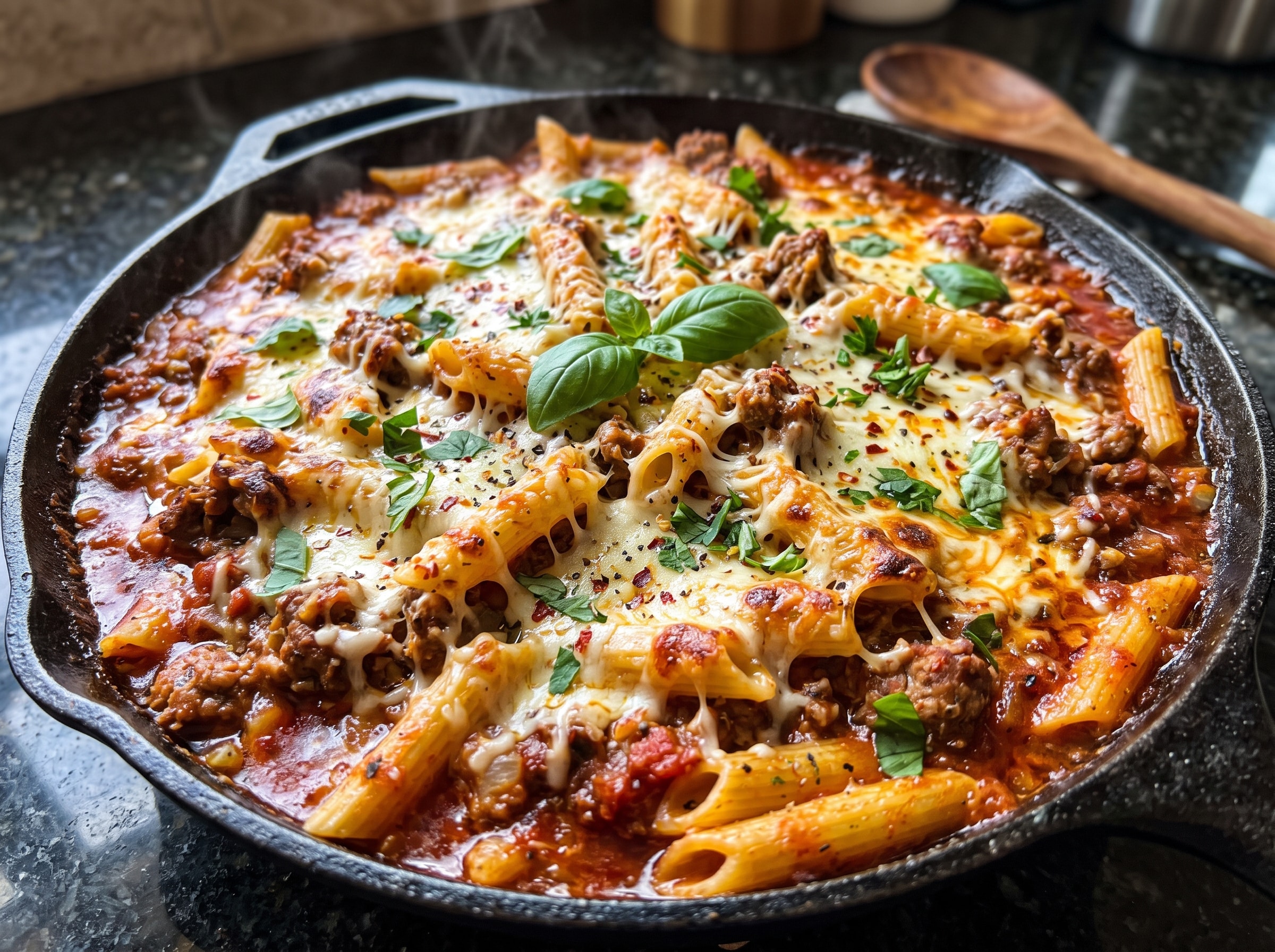
So you’re craving a mountain of comfort food but you’re also running on approximately three brain cells and a profound desire to wash exactly one pan tonight? Same. Enter the holy grail of lazy-but-luxurious dinners: the ultimate one-skillet meat sauce and pasta. It’s bubbly, it’s cheesy, it’s aggressively savory, and it doesn’t require you to wait for a massive pot of water to boil while you slowly wither away from hunger in the kitchen.
We’ve all been there. You come home after a brutal day, your stomach is growling loud enough to startle the cat, and the absolute last thing you want to do is engage in a complex multi-step cooking production. You don’t want to mince seven different fresh herbs. You don’t want to monitor three separate burners like a air-traffic controller. You just want a hot, carb-heavy, cheese-smothered meal that hits your plate in roughly thirty minutes. Grab a fork, put on your favorite comfy pants, and let’s get into the best decision you’ll make all week.
Why This Recipe is Awesome
Let’s be entirely honest for a second. Most pasta recipes lie straight to your face. They promise a “quick weeknight meal,” but they conveniently fail to mention the four different bowls you’ll stain, the colander that will inevitably clog with starchy residue, and the fact that you have to time the noodle-boil perfectly with the sauce-simmer. If you mess up the timing by even two minutes, you’re left with either cold sauce or mushy, overcooked pasta that tastes like cardboard. It’s an exhausting logistical tightrope walk that nobody should have to endure on a Monday night.
This recipe is completely different. It is delightfully, beautifully idiot-proof; honestly, even I didn’t mess it up on my first try, and I once managed to burn cereal. It strips away all the unnecessary snobbery of traditional Italian cooking and replaces it with pure, unadulterated efficiency.
Here is why you are going to fall completely in love with this skillet masterpiece:
- One Pan to Rule Them All: You cook the meat, sweat the aromatic vegetables, simmer the rich sauce, and boil the pasta all in the exact same skillet. Your dishwasher—or your own tired hands—will practically sing your praises when cleanup time rolls around.
- Maximum Flavor, Minimum Effort: Because the pasta cooks directly in the meat sauce and beef broth, it absorbs all those rich, savory, fatty juices instead of just plain old salted water. Every single noodle becomes infused with flavor from the inside out.
- Extremely Forgiving: Did you accidentally leave the meat on the stove thirty seconds too long while checking your phone? It’s fine. Did you eyeball the cheese measurement and accidentally dump double the recommended amount into the pan? Congratulations, you just improved the recipe.
Think of this dish as the ultimate weeknight warrior. It possesses a strange, magical quality: it tastes like it spent four hours simmering on a grandmother’s stove in Tuscany, but in reality, it took you about half an hour while you were wearing sweatpants and listening to a true-crime podcast. It’s comforting, it’s rich, and it yields incredible leftovers that might taste even better the next day. What more could you possibly ask from a single piece of cookware?
Ingredients You’ll Need
Before you start rummaging through your cabinets like a raccoon in a dumpster, let’s assemble the squad. Don’t worry if you’re missing one or two things—we’ll talk about fixes and substitutions a little later on. For now, here is your target lineup for the ultimate grocery list:
- 1 pound Ground Beef: Go for 80/20 or 85/15 fat content here. Lean beef is great for fitness influencers who like eating dry food, but we want flavor, moisture, and rendering fat to cook our onions in.
- 1 Medium Yellow Onion: Diced up nice and small. If you find yourself crying while cutting it, just tell everyone in the house that you’re deeply moved by the sheer beauty of carbohydrates.
- 3 cloves Garlic: Minced or grated. And yes, if your soul or your ancestors tell you to use five or six cloves instead, you listen to that inner voice. We don’t judge garlic volume in this house.
- 8 ounces Short Pasta: Penne, rotini, cavatappi, or rigatoni work best here. Save the long spaghetti and linguine for another night; we need sturdy shapes with ridges and hollow interiors that can aggressively hold onto the meat.
- 24 ounces Marinara Sauce: Grab a jar of your favorite store-bought brand. No need to play the hero and crush your own San Marzano tomatoes today. Find one with garlic or basil for an extra flavor boost.
- 2 cups Beef Broth: This is the secret liquid weapon that will cook our pasta right in the pan. It adds a deep, savory baseline that regular water just can’t compete with.
- 1 teaspoon Italian Seasoning: A classic, reliable blend of oregano, basil, thyme, and rosemary to make things smell intensely legit without opening five different spice jars.
- 1/2 teaspoon Red Pepper Flakes (Optional): Just a tiny pinch to give the sauce a subtle, warming kick. It won’t blow your head off, promise.
- 1/2 cup Shredded Mozzarella Cheese: For that crucial, gooey, Instagram-worthy cheese pull across the top of the skillet.
- 1/4 cup Grated Parmesan Cheese: Because you can never have too much dairy, and it adds a sharp, salty punch at the very end.
- 1 tablespoon Olive Oil: Just to get the party started in the pan so your beef doesn’t stick before it renders its own fat.
- Salt and Pepper: To taste. Please do not skip these; your food deserves to have a personality, and salt is the key to unlocking it.
Step-by-Step Instructions
Alright, tie back your hair, roll up your sleeves, put on some good cooking music, and let’s make some culinary magic happen in real-time.
+-------------------------------------------------------------+
|                     THE SKILLET TIMELINE                    |
|                                                             |
|  [0-5 min]     [5-9 min]     [10-11 min]     [12-25 min]    |
|  Brown Beef -> Cook Onions -> Add Garlic -> Simmer Pasta   |
+-------------------------------------------------------------+
1. Brown the Meat
Place your largest, deepest skillet (preferably a 12-inch cast iron or a deep non-stick pan) over medium-high heat and toss in the olive oil. Once the oil shimmers, add your ground beef. Grab a wooden spoon or a sturdy spatula and break the meat apart into small crumbles like it owes you money. Cook it until it’s beautifully browned and there is no pink left, which should take about 5–6 minutes.
2. Sweat the Veggies
Drop the heat down to medium. Do not drain the fat unless you have a literal swimming pool of grease in there; that liquid gold is where the flavor lives. Toss in your finely diced onion right into the skillet with the beef. Cook, stirring occasionally, for about 3–4 minutes until the onions start to look translucent, soft, and slightly sweet.
3. Bring on the Garlic
Add your minced garlic, the Italian seasoning, and the optional red pepper flakes. Stir everything together constantly for about 60 seconds. Do not walk away from the stove right now. Burnt garlic smells like absolute sadness, tastes incredibly bitter, and ruins everything it touches. Keep it moving until your kitchen smells like an upscale Italian trattoria.
4. Build the Liquid Base
Pour in your entire jar of marinara sauce and follow it immediately with the 2 cups of beef broth. Give it a good, vigorous stir to scrape up any delicious, caramelized brown bits stuck to the bottom of the pan. Those bits are called fond, and they are flavor concentrates. Bring the whole mixture up to a gentle, bubbling boil.
5. Drop the Pasta
Stir in your uncooked, dry pasta directly into the bubbling sauce. Use your spoon to flatten the noodles out, making sure they are mostly submerged in the liquid matrix. Cover the skillet tightly with a lid, turn the heat down to medium-low so it’s at a steady simmer, and let the stove do the heavy lifting.
6. The Periodic Stir
Let the pasta cook in its saucy bath for about 12–15 minutes. You absolutely need to stir this every three minutes to make sure the pasta doesn’t settle to the bottom, stick to the hot metal, and throw a starchy tantrum. Around the 12-minute mark, fish out a noodle and bite into it. It should be perfectly al dente—cooked through but with a slight, satisfying chew.
7. Make it Cheesy
Remove the lid. If the sauce still looks a little too loose or watery, let it bubble uncovered for another minute or two to thicken up. Turn off the heat entirely. Dump your mozzarella and parmesan over the top in a generous, even layer. Put the lid back on for 2 minutes, allowing the residual heat to melt the cheese into a beautiful, gooey, molten blanket. Serve it straight from the skillet!
Common Mistakes to Avoid
Even though this recipe is incredibly straightforward and designed for maximum ease, humans possess a remarkable, almost artistic ability to complicate simple things. IMO, keeping an eye out for these few common slip-ups will guarantee absolute perfection every single time you cook.
- Leaving the Skillet Uncovered: If you don’t put a lid on the pan while the pasta is simmering, all your precious liquid will evaporate into your kitchen ceiling instead of cooking your noodles. You’ll end up with crunchy, half-raw pasta and a sad, thick paste. If you don’t have a lid that fits your big skillet, just invert a large baking sheet or a piece of aluminum foil over the top. Resourcefulness is key.
- Forgetting to Stir the Pan: Pasta is incredibly starchy, and starch loves nothing more than bonding with hot metal. If you just walk away to watch TV for fifteen minutes, you’ll end up with a layer of carbonized noodle concrete permanently fused to the bottom of your skillet. Give it a little love tap and a thorough stir every few minutes to keep those noodles floating freely.
- Using the Wrong Pasta Shape: Long, thin, delicate strands like angel hair, spaghetti, or fettuccine will clump together into a weird, starchy, inseparable bird’s nest in a one-pot setup like this. They need a massive pool of water to swim in. For a skillet meal, you must stick to sturdy, short shapes like penne or campanelle that can handle being tossed around with heavy meat.
- Not Seasoning as You Go: Store-bought broths and jarred marinara sauces vary wildly in their salt and sugar content. Some are salt bombs; others taste like absolutely nothing. Taste your sauce before you add the pasta, and taste it again right before you add the cheese. If it tastes flat or boring, it doesn’t need more complex spices—it just needs a healthy pinch of salt and a grind of fresh black pepper.
Alternatives & Substitutions
Don’t feel like putting on real shoes and running to the grocery store? I completely get it. Put down your car keys and check your fridge, because this skillet is highly adaptable and can handle whatever chaotic ingredients you happen to have on hand.
If you don’t want to use ground beef, ground turkey, chicken, or sweet Italian sausage make incredible substitutes. In fact, using pork sausage will give the dish a massive, built-in flavor boost because of the fennel and spices already packed into it—just keep an eye on your salt levels so it doesn’t get overwhelming. For a completely plant-based or vegetarian option, you can swap the meat for a can of rinsed brown lentils, or a hefty mix of finely chopped cremini mushrooms and diced zucchini.
When it comes to the cooking liquid, if you happen to look in your pantry and realize you’re completely out of beef broth, don’t panic. Chicken broth, vegetable broth, or even bone broth work perfectly fine. In a total pinch, you can even use plain old water mixed with a splash of soy sauce or a crumbled bouillon cube. The goal is simply to create a savory, moist environment for those noodles to expand in.
Finally, let’s talk about the dairy situation. Mozzarella is undoubtedly the gold standard for achieving that stretchy, gooey texture, but if you only have a block of sharp cheddar, provolone, fontina, or Monterey Jack on hand, go ahead and shred it up. Will it taste like traditional Italian comfort food? Absolutely not. Will it still taste entirely amazing? Yes, because melted cheese on top of warm carbs is a universally perfect combination across all human cultures.
FAQ
Can I use gluten-free pasta for this recipe?
You absolutely can, but you need to be highly vigilant. Gluten-free pasta—especially versions crafted from chickpea, lentil, or brown rice—breaks down much faster than traditional wheat pasta. It can easily cross the line from cooked to absolute mush if left unattended. Check on your gluten-free noodles about 3 to 4 minutes earlier than the recipe states, and turn off the heat the exact second they lose their crunch.
What should I do if the sauce gets too thick before the pasta is fully cooked?
Don’t panic! This is a very common scenario that usually just means your stove burner runs a little hotter than mine. If you notice the liquid disappearing but your noodles are still a bit too firm to the bite, simply splash in an extra quarter-cup of broth or water from the tap. Give it a quick stir, put the lid back on, and let it keep simmering. Repeat as necessary until the pasta behaves.
Can I double this recipe to feed a big crowd?
Technically yes, but you are going to need a monstrously large skillet, a massive braiser, or a heavy-duty Dutch oven to hold that much volume. If your pan isn’t wide enough to let the pasta move around freely, the weight of the ingredients will press down on the bottom noodles, causing them to cook unevenly or stick. If you’re cooking for an army, make sure your vessel has high sides and plenty of breathing room.
Is it possible to use frozen ground beef directly in the pan?
Please, for the love of all things delicious, do not do that to yourself. Take the time to thaw the meat safely first. Trying to cook a solid block of frozen beef directly in a hot skillet will result in a weirdly boiled, grey texture on the outside while the center remains raw and ice-cold. Furthermore, it will release an enormous amount of excess water into your pan, ruining your ability to get a proper sear on your onions and garlic.
How long do the leftovers keep in the refrigerator?
This stuff actually tastes even better the next day once the flavors have had twelve hours to mingle and get to know each other in the dark. Store your leftovers in an airtight glass or plastic container for up to 3 to 4 days. When you’re ready to reheat a portion, add a tiny splash of water or milk to the bowl before microwaving it. This revives the sauce and keeps the cheese from turning oily and separated.
Can I add extra vegetables to the sauce?
Go for it! If you have a handful of baby spinach that is dangerously close to turning into green slime in your crisper drawer, toss it in during the last two minutes of cooking so it wilts into the sauce. Diced bell peppers, sliced mushrooms, or even some frozen peas can be added in right alongside the onions to boost the nutritional value of the meal without disrupting the cooking process.
Can I bake this skillet in the oven?
If you are using an oven-safe pan like a cast-iron skillet or a stainless steel tri-ply pan, you can absolutely elevate this dish. Instead of putting the lid back on to melt the cheese at the very end, turn your oven’s broiler on high. Pop the uncovered skillet under the broiler for 2–3 minutes until the cheese is not just melted, but beautifully bubbly, golden-brown, and speckled with delicious dark spots. Just remember to use an oven mitt when you grab the handle afterward!
Final Thoughts
There you have it—a restaurant-worthy, deeply comforting, incredibly satisfying skillet of meat sauce and pasta achieved without the mountain of dirty dishes, the culinary pretension, or the weeknight stress. It’s warm, it’s intensely savory, it’s cheesy enough to make you forget about your spreadsheet-filled day, and it requires minimal brainpower to execute with absolute precision.
FYI, this dish pairs beautifully with a simple, crisp side salad dressed with vinaigrette to cut through the richness, a thick slice of garlic bread for double-carb dipping action, or quite honestly, just a quiet night on the couch with a Netflix show playing in the background. You don’t need to be a professional chef with a culinary degree to put an amazing meal on the table; sometimes, all you need is a single reliable skillet, a jar of sauce, and the willingness to stir things every few minutes.
Now go impress someone—or just completely pamper yourself—with your new, wonderfully lazy, highly efficient culinary skills. Go pour yourself a drink, grab a massive spoon, and dig in. You’ve thoroughly earned it!
